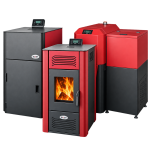
Pellet stoves and boilers
Air furnaces
0
Stoves and boilers for floor heating
0
Solid fuel stoves and fireplaces
Cookers
0
Stoves and fireplaces
0
Stoves and fireplaces for central heating
0
Stoves and fireplaces with oven
0
Additional equipment
0
Metal accessories
Home
News
Contact
Blog
FAQ
About Us
Downloads
Facebook
Instagram
Twitter
TikTok
YouTube
komercijala@blist.rs |
sales@blist.rs
English
English
Italiano
Srpski
Deutsch
Menu
Products
Solid fuel stoves and fireplaces
See all
Pellet stoves and boilers
See all
Metal accessories
See all
Cookers
Olimp 12
Olimp 9
View More
Stoves and fireplaces
Ambasador S 5.0
Ambasador S Ceramic 5.0
Atene G 4.0
View More
Stoves and fireplaces for central heating
B Max E 3.0
B2 E 4.0
Milano E 3.0
View More
Stoves and fireplaces with oven
Blist BRM
Napoli 5.0
Roma G Ceramic 5.0
View More
Additional equipment
Flue pipes
Štediša
View More
Pellet stoves and boilers
..
Air furnaces
Optima 10
View More
Stoves and boilers for floor heating
Sahara 17
Sahara 21
Tera 18
View More
Metal accessories
..
About Us
Blog
News
Customer Service
Downloads
Questions and Answers
Contact
All
All
Metal accessories
Pellet stoves and boilers
Solid fuel stoves and fireplaces
Search...
More
About us
FAQ
Contact
GEFF
Pellet stoves and boilers - Questions and Answers
home
Pellet stoves and boilers - Questions and Answers
What is the operating principle of a pellet stove?
The control panel is located on the rear part of the top plate and consists of an LCD display and 6 buttons.
The display shows all important information about the current state of the stove.
The control panel enables communication with the electronic controller via simple button presses.
By pressing the appropriate buttons, you can access different menus for monitoring and adjusting stove operation.
The stove can be fully programmed on a daily or weekly basis.
An optional WIFI controller is available for additional comfort and maximum fuel savings throughout the heating season.
What is the pellet consumption?
Pellet consumption depends on several factors, mainly the number of operating hours and selected power level.
The stove can operate at one of 5 power levels or automatically adjust based on system parameters (water temperature, room temperature, etc.).
Pellet consumption varies depending on the power level.
For example, a 21 kW stove consumes about 1.6 kg/h at minimum power and up to 4.8 kg/h at maximum power.
Exact consumption values can be found in the technical specifications of each stove.
What is the heating value of pellets and how does pellet quality affect stove performance?
The heating value of 1 kg of pellets ranges from 4.6 to 5 kWh/kg, depending on manufacturer and quality.
Proper stove operation depends directly on pellet quality.
Poor quality pellets reduce efficiency and make it harder to reach the desired temperature.
They can cause ignition and combustion issues, harder cleaning, operational errors, and reduce the stove’s lifespan.
Pellets must be stored in a dry place.
Avoid storing them in bags exposed to weather conditions.
Moist pellets lead to poor combustion and can block the auger system.
How many cubic meters of firewood does one ton of pellets replace?
One ton of pellets replaces approximately 3 – 3.5 cubic meters of firewood.
Can fuels other than wood pellets be used in a pellet stove?
No. Any other fuel can disrupt normal operation and shorten the lifespan of the stove.
Can pellet stoves for central heating be used without water?
No. It may cause structural damage to the stove and boiler and result in irreversible damage to the unit.
Can pellet stoves operate without a chimney?
Pellet stoves must not be installed without a chimney.
They require a chimney with a diameter of 80–120 mm for air stoves and 120–140 mm for central heating stoves and boilers.
The chimney draft must be between 12–14 Pa.
Is electricity required for stove operation and how much power does it consume?
Electricity is required for stove operation due to electronics, motors, an electric igniter, and in boiler models, a pump.
The average electricity consumption is about 100 W per hour.
What does the user need to adjust on a pellet stove?
The user can set room temperature, boiler water temperature (for boiler models), and stove power.
Once the set temperature is reached, the stove reduces power and enters modulation mode or Stand-By.
In modulation mode, the stove operates at minimum power to maintain the flame.
In Stand-By mode, the stove shuts down and restarts when the temperature drops.
Can the stove be set to turn on and off automatically at a specific time?
Yes, multiple times during the day.
All BLIST stoves support HRONO programming with up to 3 on/off cycles per day.
Settings can be configured individually for each day, the entire week, or weekends with a different schedule.
An optional WIFI controller allows remote control via a smartphone app.
Does a pellet stove need to be cleaned?
Yes. Cleaning is mandatory and must be performed regularly according to the manufacturer’s instructions.
It is recommended to clean the combustion chamber before each start while the stove is cold.
Regular maintenance is essential for proper and uninterrupted operation.
Maintenance is divided into daily, weekly, as-needed, and annual servicing.
Daily cleaning:
combustion chamber, ash tray, upper flue chamber and turbulators.
Weekly cleaning:
flue pipes (with steel brush), ash container and pellet hopper.
Cleaning as needed:
glass (when cold), pellet hopper and “T” junction.
Annual service:
performed by authorized service, includes cleaning soot, exhaust motor and checking all components.
Does condensation form in the flue pipes due to the low temperature of the exhaust gases?
Condensation may occur.
To prevent it, flue pipes and the chimney must be properly insulated.
Special attention should be given to sections outside the building where flue gases cool down.
What are the expected exhaust gas temperatures?
At maximum power, operating temperature ranges from 80–160°C for boiler stoves.
For air pellet stoves, temperatures range from 170–230°C.